Dear Future Educator,
In my research of Crayola Crayons, I have discovered quite a lot from the medium. I have used many methods such as applying it to different elements like fire and ice. I have tested its stain resistance on skin, clothes, and walls. Like other drawing mediums I have tested its durability and practical use as well.
You may be interested to find out that Crayons melt quite fast with a low amount of heat. The colors can blend creating new hues. Making your own crayons can be even more exciting than using a box of 64. The ice made the wax of the crayon’s brittle, they would easily break. With a small amount of soap and water they washed right off my daughters’ hands. Her clothes were fine after being washed but some colors-stained white clothes. If you melt the crayon onto the clothes the wax makes cleaning more difficult. Walls were the easiest with a Magic Eraser or even a simple soapy sponge. Unlike other drawing mediums Crayola Crayons do not blend well in their store-bought state. The amount of wax in the crayon makes shading and adding values to your work difficult. There is also a lack in variety of texture due to the nature of wax on paper. You can add texture by using hot or room temperature crayons through movement and contrast. When the crayons have heat there is less of a scratchy mark verse when they are room temperature allowing the crayon to act more like a smooth paint.
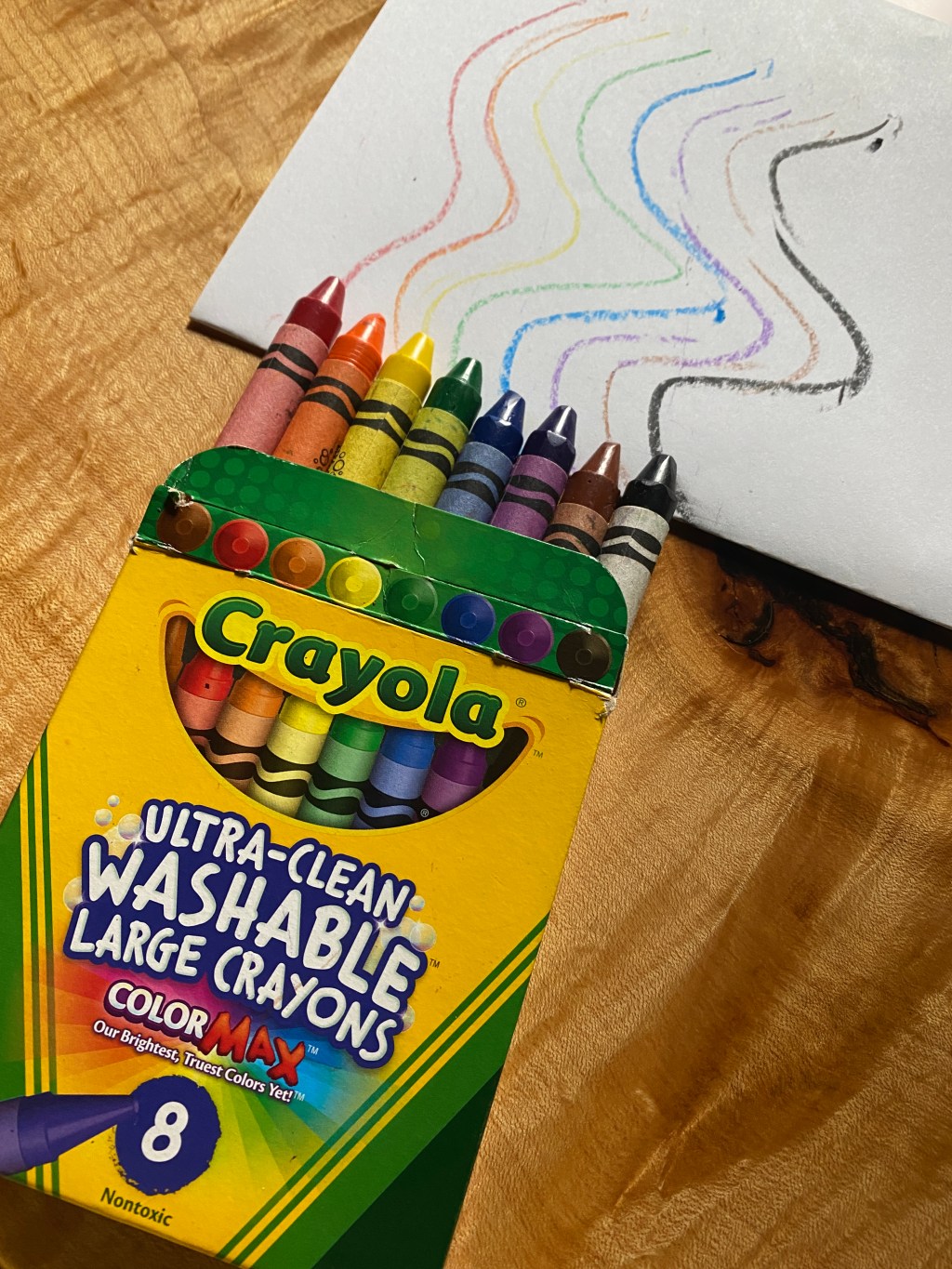
The first of the best methods used in my research was being able to explore the variety available in my local stores and asking a sales associate. From first looks seeing the shelves full of different varieties of crayons and amounts sold per box was exciting. Some boxes came with only a few, a basic rainbow of eight large crayons. The number of crayons went all the way to 152 crayons! The box even had a built-in sharpener. The type of crayon varieties is quite significant, they offer glitter, pearl, skin tone, neon, metallic and so many more it was hard to keep track. The second research approach I found to be useful was experimenting manipulation of the crayon. Blending the melted colored wax, freezing it, and just trying to use it like I would other mediums. The third best method was reading the box and labels on the crayons. This method provided me with cleaning instructions and the power of the product which can be important in the classroom and to any parent in charge of laundry. I also learned that heaven forbid my daughter, who is only one, ate the crayon, Crayola Crayons are nontoxic allowing me to give her more freedom with the material.
When implementing my research of Crayola Crayons, I noticed some connections to how I use new products for my own work as an artist. Performing experiments with materials is a great way to use them in mixed media works of art, which is my forte. I could for example melt the crayons onto my piece like the honey of a bee. I usually test new materials before I start using them in my work to find alternate ways of using them then the obvious. Also having read the label and reading about what crayons are made of, knowing their nontoxic, is great for classes containing students with disabilities such as PICA. In my experience as an educator with PICA students, they will eat everything! Sometimes the more colorful the object, the more appetizing it looks. Knowing that my students are safe even after eating an entire crayon can bring peace to the supporting staff and parents.
Overall, I am pleased with Crayola Crayons. Their products have been around for many years helping educators like you and me create beautiful works of art without risking our student’s health and safety. My research has taught me a lot about the product and the countless ways we can implement this medium into our art.
Sincerely, Mrs.Gioia
 Ariel Gioia