LATEST STORIES
-
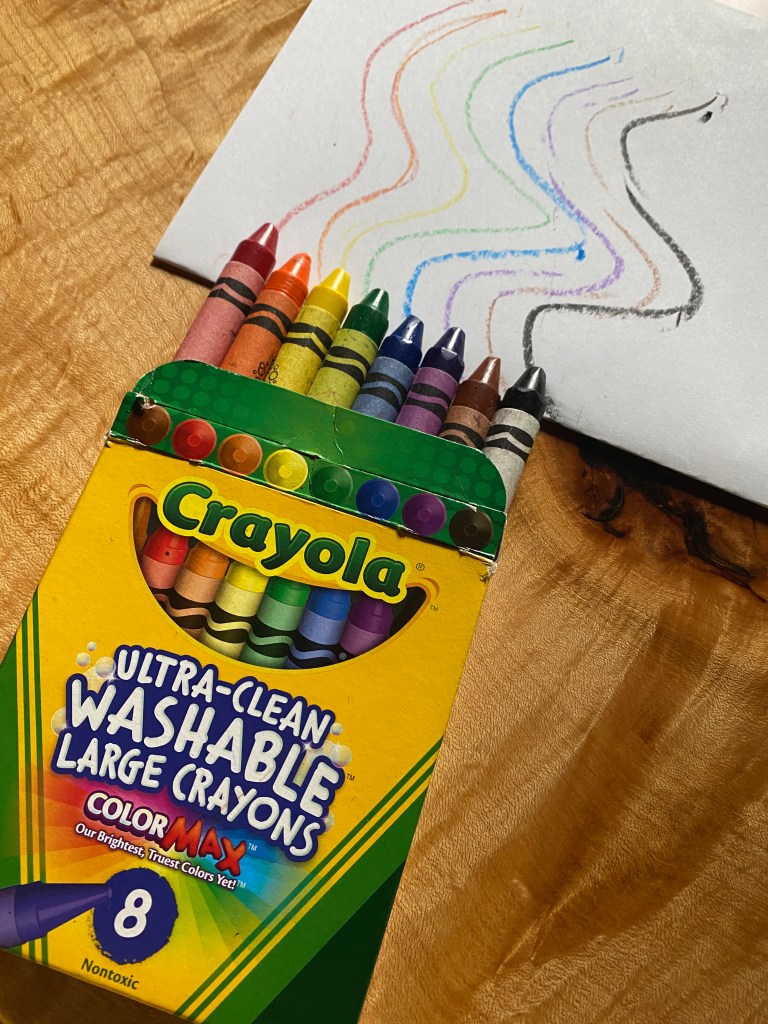
Crayola Crayons Dear Future Educator,
In my research of Crayola Crayons, I have discovered quite a lot from the medium. I have used many methods such as applying it to different elements like fire and ice. I have tested its stain resistance on skin, clothes, and walls. Like other drawing mediums I have tested its durability and practical use as well.
You may be interested to find out that Crayons melt quite fast with a low amount of heat. The colors can blend creating new hues. Making your own crayons can be even more exciting than using a box of 64. The ice made the wax of the crayon’s brittle, they would easily break. With a small amount of soap and water they washed right off my daughters’ hands. Her clothes were fine after being washed but some colors-stained white clothes. If you melt the crayon onto the clothes the wax makes cleaning more difficult. Walls were the easiest with a Magic Eraser or even a simple soapy sponge. Unlike other drawing mediums Crayola Crayons do not blend well in their store-bought state. The amount of wax in the crayon makes shading and adding values to your work difficult. There is also a lack in variety of texture due to the nature of wax on paper. You can add texture by using hot or room temperature crayons through movement and contrast. When the crayons have heat there is less of a scratchy mark verse when they are room temperature allowing the crayon to act more like a smooth paint.
The first of the best methods used in my research was being able to explore the variety available in my local stores and asking a sales associate. From first looks seeing the shelves full of different varieties of crayons and amounts sold per box was exciting. Some boxes came with only a few, a basic rainbow of eight large crayons. The number of crayons went all the way to 152 crayons! The box even had a built-in sharpener. The type of crayon varieties is quite significant, they offer glitter, pearl, skin tone, neon, metallic and so many more it was hard to keep track. The second research approach I found to be useful was experimenting manipulation of the crayon. Blending the melted colored wax, freezing it, and just trying to use it like I would other mediums. The third best method was reading the box and labels on the crayons. This method provided me with cleaning instructions and the power of the product which can be important in the classroom and to any parent in charge of laundry. I also learned that heaven forbid my daughter, who is only one, ate the crayon, Crayola Crayons are nontoxic allowing me to give her more freedom with the material.
When implementing my research of Crayola Crayons, I noticed some connections to how I use new products for my own work as an artist. Performing experiments with materials is a great way to use them in mixed media works of art, which is my forte. I could for example melt the crayons onto my piece like the honey of a bee. I usually test new materials before I start using them in my work to find alternate ways of using them then the obvious. Also having read the label and reading about what crayons are made of, knowing their nontoxic, is great for classes containing students with disabilities such as PICA. In my experience as an educator with PICA students, they will eat everything! Sometimes the more colorful the object, the more appetizing it looks. Knowing that my students are safe even after eating an entire crayon can bring peace to the supporting staff and parents.
Overall, I am pleased with Crayola Crayons. Their products have been around for many years helping educators like you and me create beautiful works of art without risking our student’s health and safety. My research has taught me a lot about the product and the countless ways we can implement this medium into our art.
-

Saint Card Saint of Strength
Artemisia born in 1593, was and still is, considered a feminist icon and teenage prodigy in the art world. Her father Orazio was a founder of his own Atelier creating family ties for Artemisia’s success. “The transmission of the artistic profession from father to son was considered a matter of course.” (Nochlin) However, it was rare for a daughter to achieve such greatness through her father’s connections. Artemisia’s relationship with her father allowed for her to pave her own way and later create a career and her own Atelier.
In Artemisia’s teen, years barely seventeen years old, she was molested by a peer named Agostino Tassi. After the incident, as it was not proper for a woman to be “tainted”, Agostino offered to marry Artemisia, who felt she had no other choice. Soon after her father Orazio found out, he sent out a lawsuit against Agostino to revive Artemisia’s good name, as only men were allowed to do so. During the trials she was tortured and subjected to “Sibille”. Sibille is the act of wearing metal rings on your fingers that are increasingly tightened over time to ensure she was telling the truth. (Poggioli) The trial lasted seven months in the year of 1612. Court later found out that Agostino had his past wife murdered and stole artwork from Orazio. The court found Agostino guilty, and Artemisia’s reputation was restored!
After the trial Artemisia learned how to read, she set up her own Atelier and was the first female admitted to the Accademia Del Disegno (school of design). Her painting after the trial in 1620 “Judith Slaying Holofernes”, is a descriptive image of “the biblical story of a Jewish woman who kills an Assyrian General, an enemy of her people, by pretending to seduce him.” (Guerrilla Girls) This image was graphic and considered in the public eye a reference of revenge against Agostino. The reality is that Artemisia wanted to show Judith’s strength and intention of the killing by facing Holofernes head on as a woman. Looking at her action of the killing creating a powerful narrative. Women were often painted facing away from derogatory actions. Yes, there is some underlying emotion to this piece associated to her molestation, but it is also a stance against male privilege in the art world.
Artemisia later married a rich painter from Florence, who helped bear her a son. She eventually became a single mom traveling around Italy and paved a career as a court painter to the king of England. She has thirty paintings on view at Rome’s Palazzo Braschi. Artemisia “broke Counter-Reformation taboos at a time when female artists were confined to still life and portrait painting.” (Poggioli) She is a force for women around the world passing in the year 1652.
Citations:
Girls, Guerrilla. The Guerrilla Girls’ Bedside Companion to The History Of Western Art. Penguin Books, 1998.
Nochlin, Linda. Women, Art, And Power and Other Essays. Westview Press, 1988, pp. 147-158
Poggioli, Sylvia. “Long Seen as Victim, 17Th Century Italian Painter Emerges As Feminist Icon | All Things Considered | WNYC”. WNYC, 2016, https://www.wnyc.org/story/long-seen-as-victim-17th-century-italian-painter-emerges-as-feminist-icon/.
Interview Participant Biography
Ann Teed is a professor at Adelphi University, currently finishing up her dissertation at Columbia University in the Arts. Along with her many accomplishments she is a renowned teacher at Adelphi. Her many visual arts interests include, mixed media, clay, photography, printmaking, found object sculpture, computer integration of visual and audio media. For performance arts she is an award-winning songwriter, vocalist/singer, musician, interested in DJ, dance, short film and internet integration. As an educator she is nothing less than supportive and inspiring to everyone she encounters. Her love for the arts is contagious.
Major Takeaways From Discussion with Ann Teed
Data Discussion from Interview with Ann Teed:
I believe this interview solidified what I already felt was true. Interviewing Professor Ann Teed who is working on her dissertation at Columbia University on education in the arts, was the perfect choice when discussing my topic idea. Professor Teed consistently expressed similar beliefs when it comes to teaching the arts, skills, theory, and emotional balance. All having a place and time in the educating of art students. She feels strongly about the idea of ‘parroting’ and that students should be taught to listen even if their opinions differ from others in the class. Creating mindful humans who are open to progress.
I expressed to her that even as a young child I loved to go against the grain during class discussions, a sort of ‘devil’s advocate’ if you will. I would bring up topics that others may feel uncomfortable discussing or could view differently than the majority. As a society it is important to be open minded that people are different. I knew this growing up but in today’s society things have become either right or wrong, an example, cancel culture. Students are aggressively aware of this. Professor Teed full heartedly agreed that as educators we do not teach right or wrong, it is not our job. She stated:
“I feel very strongly about this. I believe after 42 years of teaching, when you are discussing controversial, political, even spiritual, religion, whatever comes up in the classroom. You are talking to young people, even in high school, they are still formulating their opinions. They are basically parroting those forces who they feel safe to parrot. If their parents believe a certain way, they will parrot that belief system, attitude, or comment because it’s familiar to them. There is a hierarchy of safeness when we join the comradery of something. In k-12, schools that are still dealing with development and growing human beings, the students haven’t really had the opportunity to hone their own beliefs. So, you must make sure you are creating an opportunity for them to be good listeners and to be aware that their opinions that they are bringing forth may not be the opinion of others. You’re really ripening their sense of listening and that maybe their parents or community may be different, wrong, or right. You’re cultivating an openness, a sense of equity and being able to listen to others.”
The arts are the center for expression. Creating works that can effectively communicate our views and opinions is therapeutic. It can also open minds to the artists point of view effectivity making the audience more aware of self, global, and community issues. Art is a balance of expression, skill, and art theory. Changing as we grow older along with the educational format we present to our students.
Major Takeaways From Interviews
Interview Takeaway from Professor Ann Teed:
-As a society it is important to be open minded that people are different. I knew this growing up but in today’s society things have become either right or wrong, an example, cancel culture. Students are aggressively aware of this. Professor Teed full heartedly agreed that as educators we do not teach right or wrong, it is not our job. She stated:
“I feel very strongly about this. I believe after 42 years of teaching, when you are discussing controversial, political, even spiritual, religion, whatever comes up in the classroom. You are talking to young people, even in high school, they are still formulating their opinions. They are basically parroting those forces who they feel safe to parrot. If their parents believe a certain way, they will parrot that belief system, attitude, or comment because it’s familiar to them. There is a hierarchy of safeness when we join the comradery of something. In k-12, schools that are still dealing with development and growing human beings, the students haven’t really had the opportunity to hone their own beliefs. So, you must make sure you are creating an opportunity for them to be good listeners and to be aware that their opinions that they are bringing forth may not be the opinion of others. You’re really ripening their sense of listening and that maybe their parents or community may be different, wrong, or right. You’re cultivating an openness, a sense of equity and being able to listen to others.” -Ann Teed
-Arts are the center for expression. Creating works that can effectively communicate our views and opinions is therapeutic. It can also open minds to the artists point of view effectivity making the audience more aware of self, global, and community issues. Art is a balance of expression, skill, and art theory. Changing as we grow older along with the educational format we present to our students.
“I think as art educators in the world of art we are always challenging art theory. I believe it is important but it’s not the main emphasis. I think the pendulum is really swinging to be much more about emotional and developmental purpose of creating art, being authentic, developing identities, and opinions. The scales again are the facilitator to having that true engagement with the self. Emotion is the connection to our own being and what we believe. If you look at Kandinsky and all these artists that are about spirituality and art, what where they really saying? It wasn’t even religious; they were saying we are this tiny cosmic thing in this much boarder thing and that art was a vehicle to interplay between this being and a greater energy. The changing of STEM to STEAM to now the therapeutic and developmental bonus of art is unmatched by any. We are the stem to learning. The idea of art has greatly shifted, its skill packed, emotional and shifted from the needs in the classroom. A group of second graders will be very different from high school, who are dealing so much more with their gender, jobs, sex, and drugs. The needs help switch the balance. As we progress in age we change from theory and skill to self-content and world content. Having the students use what we thought them earlier, the skills and theory to communicate.” -Ann Teed
Interview Takeaway from Mrs. Powers:
-Keeping young students engaged during class time can be difficult, especially for those who have disabilities. Being engaging and entertaining with your students in a controlled manner can help alleviate anxiety, stress and behavioral outbursts during lesson times that are not as engaging. Behavioral outburst often occurs when the students have time to focus on their thoughts and physical status. Using tools such as Larry the Eel can help students and teachers maintain control.
“I also use tools to maintain focus like Larry the Eel (a stuffed eel) who helps teach lines and other various curriculum. The kids love seeing him come out at class and with my enthusiasm I can keep them entertained while teaching lines. We play games with Larry, and we copy Larry with our arms when he makes a various line. They think of him as a friend, and I can use him as a behavioral tool later during work time because ‘Larry only sits at tables that are working nicely.’” -Mrs. Powers
 Ariel Gioia